



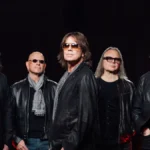

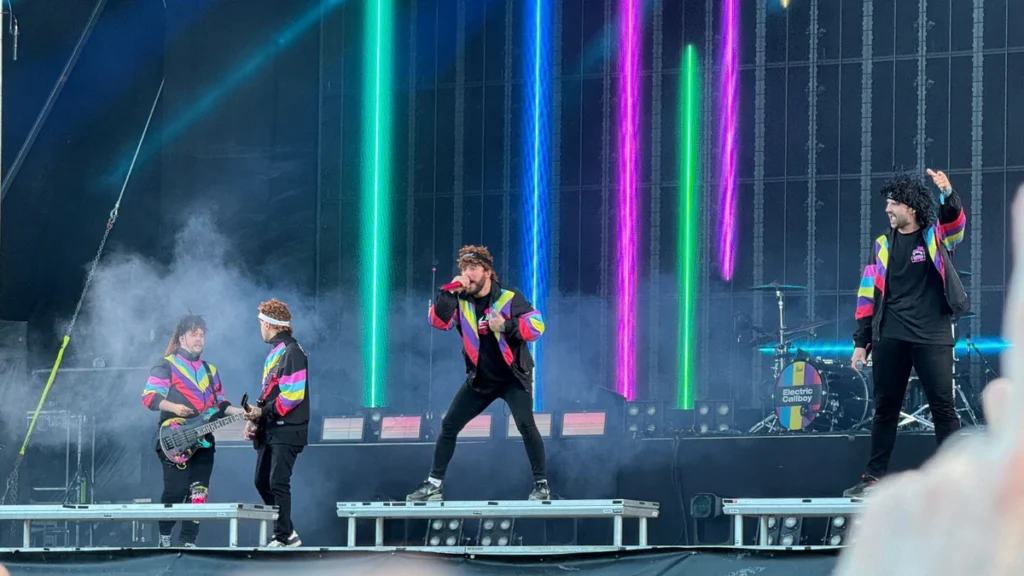
Electric Callboy performing in 2024.
Electric Callboy play five Australian arenas in nine days from 4 September, behind an album released this month.
The run opens in Perth and finishes in Brisbane.
Five Arenas in Nine Days
The routing is Perth, Adelaide, Melbourne, Sydney and Brisbane, which is the standard Australian circuit and a punishing one.
The distances involved are closer to touring Europe than touring a single country, and every date requires a flight rather than a drive.
Perth in particular is one of the most isolated cities on earth, sitting several thousand kilometres from the rest of the routing, and it is the first thing cut when a tour tightens.
Opening there rather than skipping it is a commitment that costs real money before a note is played.
Arena Scale for a Metalcore Band
Rod Laver Arena and Qudos Bank Arena are the rooms international pop acts play, seating in the tens of thousands.
Very few heavy bands reach that scale in Australia, and almost none from continental Europe.
What makes it possible is that this is not a straightforwardly heavy band, which is the entire argument about them.
The Album Behind It
Tanzneid arrived this month through Century Media and was well received, taking four stars from Kerrang.
Century Media is one of the long-established metal independents, and its roster is largely bands who would never be described as fun.
Having an act on it that fills arenas on the strength of comedy videos is an unusual position for everyone involved.
What the Band Actually Does
The music combines metalcore with electronic dance production and Eurodance melody, played by a band that is technically capable of the heavy parts.
That combination existed before and was mostly regarded as a joke, and the difference here is that the joke is intentional and the playing is not.
Songs move between breakdowns and synth hooks without treating either as ironic, which is harder to execute than it sounds.
The Videos Did the Work
The band’s growth came primarily through video rather than through radio, streaming playlists or press.
The videos are comedic, heavily costumed and built around a visual joke that carries without language, which matters enormously for a German band reaching a global audience.
That route is now a well-established alternative to the traditional one, and this is among its clearest success stories in heavy music.
Why Comedy Bands Rarely Last
The obvious objection is that a joke has a shelf life, and the history of comic bands supports it.
Audiences tire of a gag faster than they tire of a song, and an act built on humour has to keep escalating or accept diminishing returns.
The escape route is the same one available to anybody: write songs that work without the joke, so the humour becomes a delivery mechanism rather than the product.
Changing the Name
The band operated under a different name for most of its existence and changed it in 2022, having concluded the original was not defensible.
Name changes of that kind are more disruptive than they appear, since a decade of search results, merchandise and back catalogue points at the old one.
Doing it immediately before the biggest commercial period of the career turned out not to cost them anything, which is not the usual outcome.
A German Band Abroad
Germany has one of the largest domestic heavy music markets in the world, with a festival infrastructure nothing else matches.
That means a German band can sustain a substantial career without ever leaving the country, and many do exactly that.
Building an international touring business on top of that base is a separate project, and Australian arenas are near the far end of it.
Festival Headlines Next Year
They are confirmed to headline a British festival and to appear at a major German one next year.
Festival headline slots are booked eighteen months to two years ahead, which means those decisions were made before this album existed.
Promoters committing that early are betting on the live act rather than on the record, which tells you which one is driving the business.
Bloodstock and the Purist Question
A band like this headlining a traditionally-minded metal festival reliably produces an argument in the audience.
The complaint is always some version of the same one: that the booking prioritises numbers over the genre’s identity.
The counter-argument is that festivals must sell tickets to exist, and that the bands complaining loudest are usually playing earlier in the day because fewer people want to see them.
Costume as Infrastructure
The visual presentation is elaborate, coordinated and changes with each album cycle.
That is a production cost most bands at this level do not carry, requiring wardrobe, replacements and someone whose job it is to manage it on the road.
It also makes the act legible from the back of an arena, which is a practical problem that costume solves better than lighting does.
Playing Australia at All
Australian dates are among the most expensive a European band can mount, and the reasons are purely geographic.
The flights are long, the freight is enormous, and the market is smaller than Europe or North America, so the arithmetic only works at arena scale or as part of a festival.
A five-date arena run without a festival anchor means the band is selling those rooms on their own name.
September in the Southern Hemisphere
Early September is the start of spring in Australia, which is a sensible touring window and a crowded one.
International acts cluster into the Australian spring and autumn to avoid the summer festival season at home and the winter at the other end.
That means competing for the same audience’s disposable income with several other visiting tours in the same fortnight.
How a Band Gets to Arenas Without Radio
The path this band took is worth setting out, because it is now more common than the traditional one and still poorly understood.
A video that travels internationally does something radio never could: it reaches people who do not speak the language, do not follow the genre, and were not looking for music at all. The song arrives as a by-product of the joke.
What converts that into ticket sales is the second step, which most viral acts never manage. The audience has to be given a reason to attend, which means the live show must deliver something the video does not.
Bands who solve that end up in arenas without ever having a radio hit, and bands who do not end up with enormous view counts and empty rooms. The distinction is entirely about whether the live act is real.
Why Heavy Music Is Comfortable With This
Metal audiences have a reputation for gatekeeping that is only half deserved, and the exceptions are instructive.
The genre has repeatedly absorbed acts that arrived through the wrong door, provided the musicianship survived scrutiny. Costume, theatre and outright comedy have all been accepted; incompetence has not.
That is a more coherent standard than it is usually given credit for. It explains why a band in matching neon tracksuits can headline a festival that would reject a technically weaker band playing entirely straight.
The test being applied is not seriousness. It is whether the band can actually play.
What Is Actually Being Tested
Two things. Whether five Australian arenas sell on a name built primarily through video rather than through touring history in that country.
And whether an act with a comic premise holds a headline festival slot booked two years in advance, which is a bet on durability rather than on novelty.
Five arenas, nine days, one album released this month, and a festival headline already booked for next year.
About The Author




More Stories
Matt Springfield: Poplife and Its Greg Haver Sessions, Reconsidered
How FYDStar Got Scream’s Cosmic Sludge Pop Out of a Bass and Drums Duo
Overcome by FISTFIGHT HXC, Reconsidered: Regina Hardcore with a Thrash Pulse