





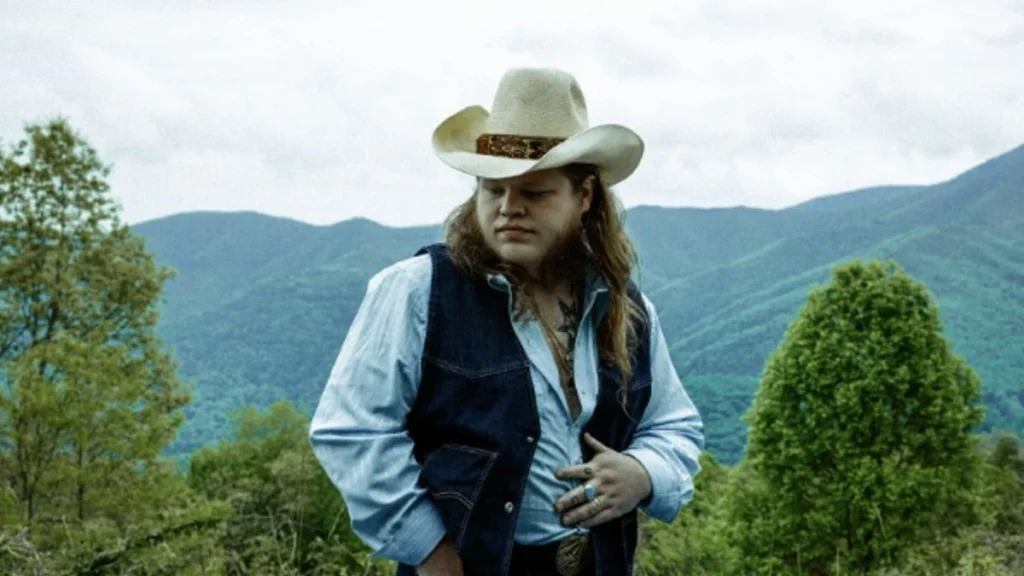
Marcus King, press photograph issued with the Darling Blue tour announcement.
Marcus King added thirty-nine cities to the touring behind his 2025 album, opening in Atlanta in May.
Before that he spent March in a New York jazz club and April in Australia.
A Second Leg Larger Than the First
Thirty-nine cities is a substantial addition rather than a handful of make-up dates.
Expansions on that scale happen when the first leg sold well enough that a promoter is confident committing to a full second routing rather than testing a few markets.
It also indicates a booking operation working from real numbers, since a thirty-nine city run through theatres and sheds is not a decision made on optimism.
For a guitarist still in his twenties when the album was recorded, that is an unusually fast escalation in room size.
Opening at the Fox
The run begins on 16 May at a restored 1920s cinema palace in Atlanta.
That room seats several thousand and is among the more prestigious theatre bookings in the American South, with a history of hosting exactly this kind of act.
Opening a tour there rather than easing in somewhere smaller is a confident choice, since the first night of a run is where the production is still being solved.
The Ryman in May
The Nashville date at the Ryman Auditorium falls on 27 May.
The Ryman is a former tabernacle with wooden pews, built for unamplified singing, and it remains one of the best rooms in American music for anything built on dynamics.
For a band whose selling point is volume and extended soloing, it is also a room that punishes playing flat out, which makes it a genuinely different show from the rest of the leg.
Where the Playing Comes From
The guitar work is blues before it is southern rock, and the distinction matters to how the music is built.
The vocabulary is electric blues: string bending as the primary expressive device, phrases that answer the vocal line rather than run alongside it, and a tone that stays clean enough for the note attack to be audible.
Southern rock added the twin-guitar harmony and the extended jam structure on top of that vocabulary, which is why the two categories describe the same music from different angles.
A Third-Generation Musician
He came from a family of working musicians, which is a genuinely different starting point from learning alone.
Children of professional players absorb the unglamorous parts early: how a set is paced, what a bandleader does, how to play with people rather than at them.
It usually produces musicians who are technically advanced very young and who are comfortable on a stage before they are comfortable anywhere else.
Singing Louder Than the Guitar
The voice is the less-discussed half and arguably the reason the audience has grown this fast.
It is a soul voice with genuine power, and it means the songs work as songs rather than as vehicles for solos, which is the ceiling most blues-rock guitarists hit.
Guitarists who can sing at that level have a substantially different career available to them, because they can fill a theatre rather than a blues club.
On Rick Rubin’s Label
The album came out through American Recordings alongside a major label partner.
That imprint has a specific history of taking artists associated with volume and stripping them back, most famously with a country singer in the last decade of his life.
Signing there signals an interest in the songs rather than the guitar playing, which is a meaningful positioning decision for somebody known first as a player.
A Residency in a Jazz Club
March brought a residency at a New York jazz club rather than a rock venue.
Jazz clubs are small, seated, quiet and acoustically live, with an audience listening closely from a few feet away.
That is close to the hardest room a loud guitarist can play, because everything that works in a shed becomes crude at that distance, and the playing has to be rebuilt around dynamics rather than volume.
What a Blues Player Learns There
Residencies of this kind are where blues and jazz musicians have always developed, and the mechanism is specific.
Multiple nights in one room with the same band lets a player change something every set and hear the result immediately, which is impossible on a tour that moves each morning.
It also removes the safety of a set list, since an audience returning across several nights will notice a repeat, and that pressure is what pushes a band into unfamiliar material.
Australia in April
Australian and New Zealand dates fell between the residency and the American leg.
Those markets are expensive to reach and are usually the first thing cut, so including them at this career stage indicates either strong local streaming numbers or a promoter willing to underwrite the introduction.
They are also chronically under-toured by American roots acts, which means the competition for that audience is thin.
Festivals Alongside the Theatres
The year includes several large American festivals across country, rock and roots programming.
Appearing across three different festival formats is the clearest possible evidence of an act that has not been filed into one category.
It is also commercially deliberate. A performer who can be booked by a country festival and a rock one has roughly twice the available summer.
Two Support Acts
Two artists share the opening slots across the run rather than one covering everything.
One of them also joins the Nashville date specifically, which is the usual way a home-market show is made distinct from the rest of a leg.
Rotating openers broadens the bill and spreads exposure, at the cost of more administration than a single support arrangement.
Why Southern Rock Keeps Producing Guitarists
The genre has an unusually consistent record of producing technically serious players, and there are structural reasons for it.
The music is built on extended instrumental sections, which means a guitarist has genuine space to develop rather than eight bars between choruses. A player who cannot sustain three minutes of improvisation cannot hold the gig.
The audience also listens for it. Southern rock crowds treat a solo as the point rather than an interruption, which creates demand for the skill and rewards players who develop it.
That combination has been running since the early 1970s and it explains why the genre keeps producing guitarists whose reputations extend well beyond it.
The Risk of Being the Guitar Player
An artist known primarily for playing faces a specific ceiling, and the ones who break through it do so the same way.
Instrumental reputation reaches other musicians and a specialist audience, and it stops there. Guitar magazines do not sell theatre tickets, and a player without songs tours the same rooms for twenty years.
What changes it is writing and singing, because those reach people who do not care how difficult a passage is.
A thirty-nine city theatre leg behind an album rather than behind a reputation is what that transition looks like when it works, and it is the reason the label choice and the singing matter more to this career than the playing does.
What Is Actually Being Tested
Two things. Whether an audience that grew on the guitar playing follows an artist who is increasingly presenting himself as a songwriter.
And whether thirty-nine cities is the right size for this act now, or a leg booked on the momentum of the last one.
Thirty-nine cities, one jazz club in March, a former tabernacle in May, and a guitar reputation the songs are trying to outrun.
About The Author




More Stories
The Sound of Burlington Rock-Blues: Off the Tracks by Brian Leduke
Matt Springfield: Poplife and Its Greg Haver Sessions, Reconsidered
How FYDStar Got Scream’s Cosmic Sludge Pop Out of a Bass and Drums Duo