



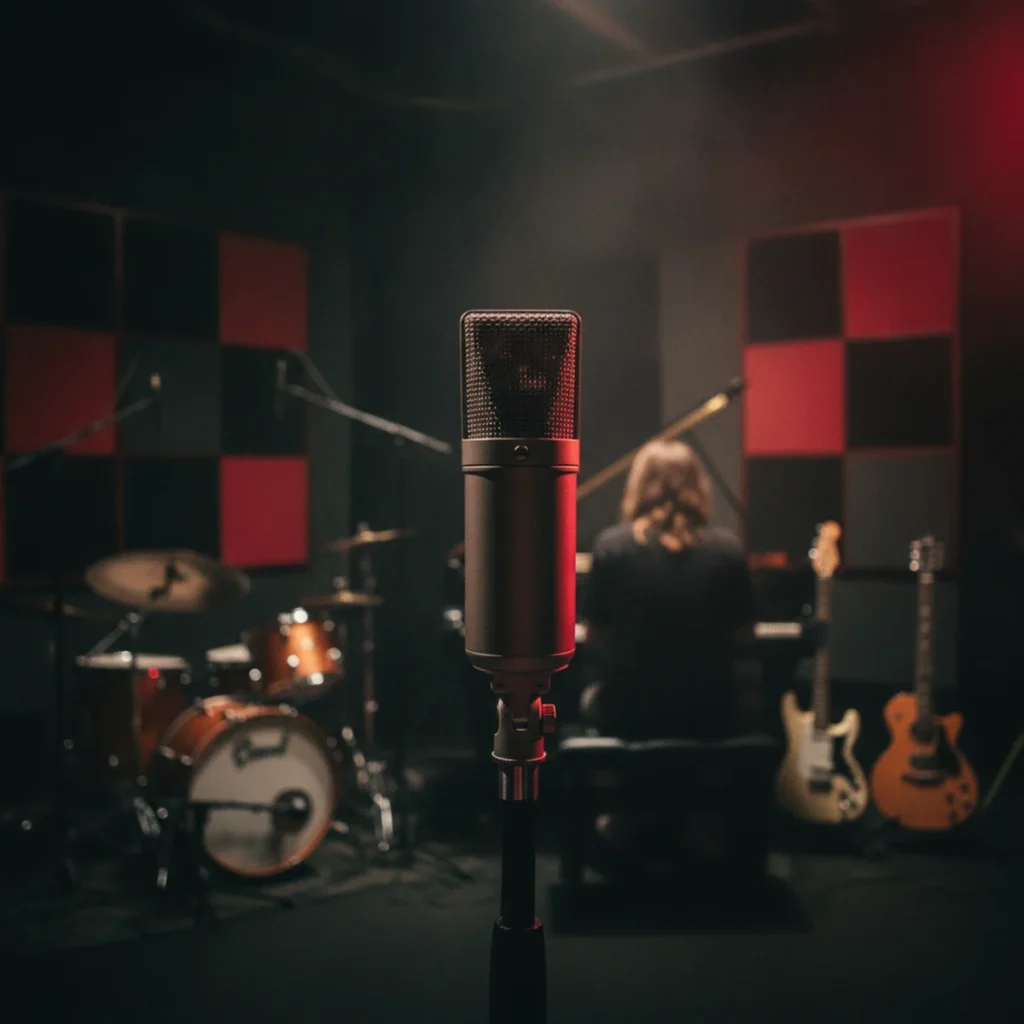
The size in a classic rock drum sound is usually the room, not the kit.
Ask what makes a heavy drum sound enormous and most people say the kit. It is almost always the room and how it was captured.
You can listen to our full playlist which contains the artist’s music, and know more about the artist’s work by scrolling down the page.

PLAYLIST
The Size Is the Room
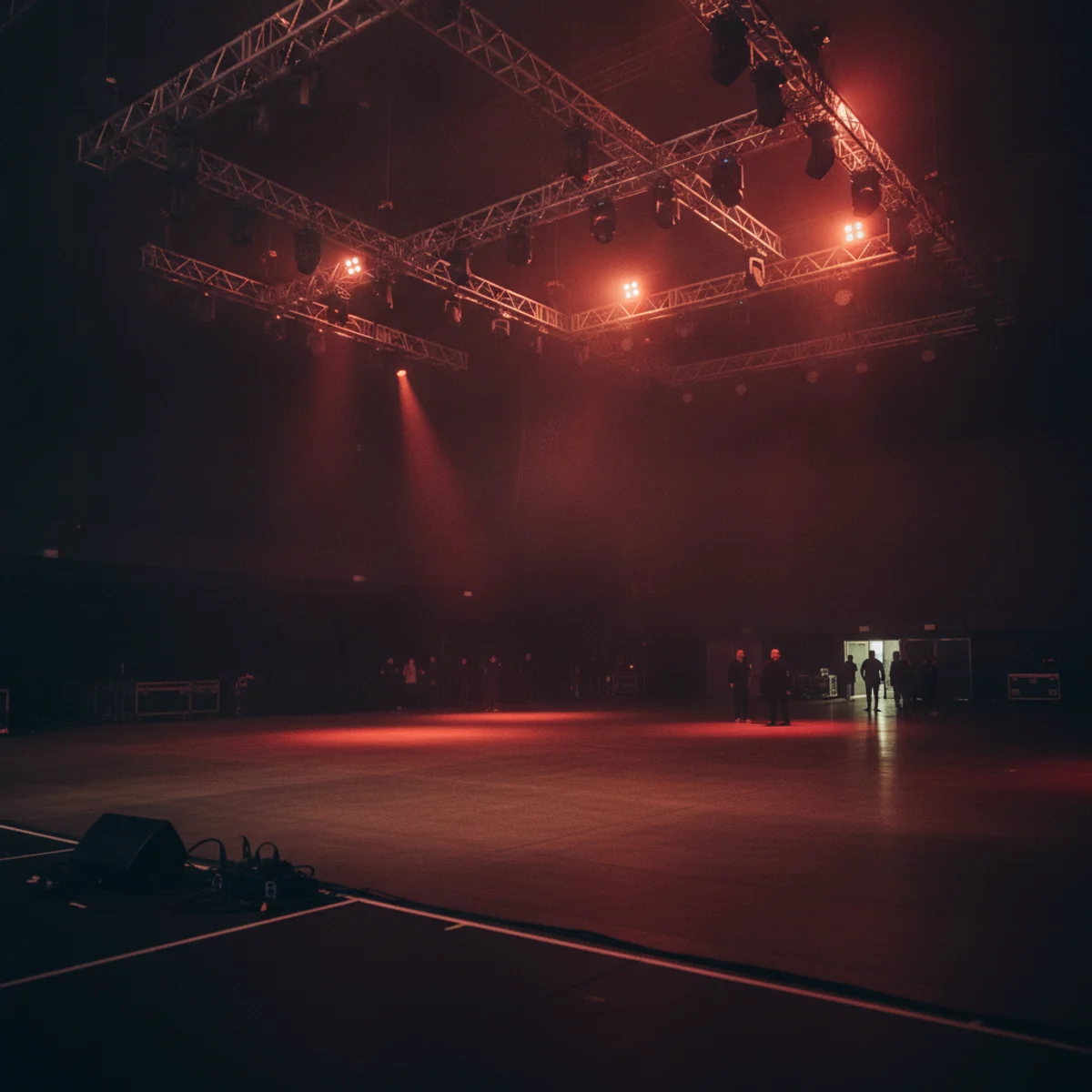
Ask what makes a classic heavy drum sound enormous and the usual answers concern the kit, the heads or the tuning. The dominant factor is almost always the room and how it was captured.
A drum kit close-miked in a dead space produces a dry, controlled, fundamentally small sound. The same kit in a large live room with distant microphones produces something that seems several times the size, with no change to the instrument.
That is because the perceived size of a sound is largely a function of the reflections around it. The kit supplies the event; the room supplies the scale.
Early Reflections Communicate Dimension
The specific cue is timing. The delay between the direct sound and the first reflections tells a listener how far away the surfaces are, and a longer delay is interpreted as a larger space.
In a small room the first reflections arrive within a few milliseconds and merge with the direct sound, producing a tight sound with no sense of space. In a large hall they arrive tens of milliseconds later and register as distinct, which the ear reads as size.
This is why artificial reverb with a short pre-delay sounds small regardless of its decay length, and why simply adding a long reverb tail to a dry kit does not reproduce the effect. The early timing carries more information than the tail.
Ceiling height is the room property that correlates most reliably with a usable drum sound. It sets the delay before the strongest single reflection, and rooms with high ceilings produce the sense of scale that width alone does not.

Distant Microphones Are the Technique
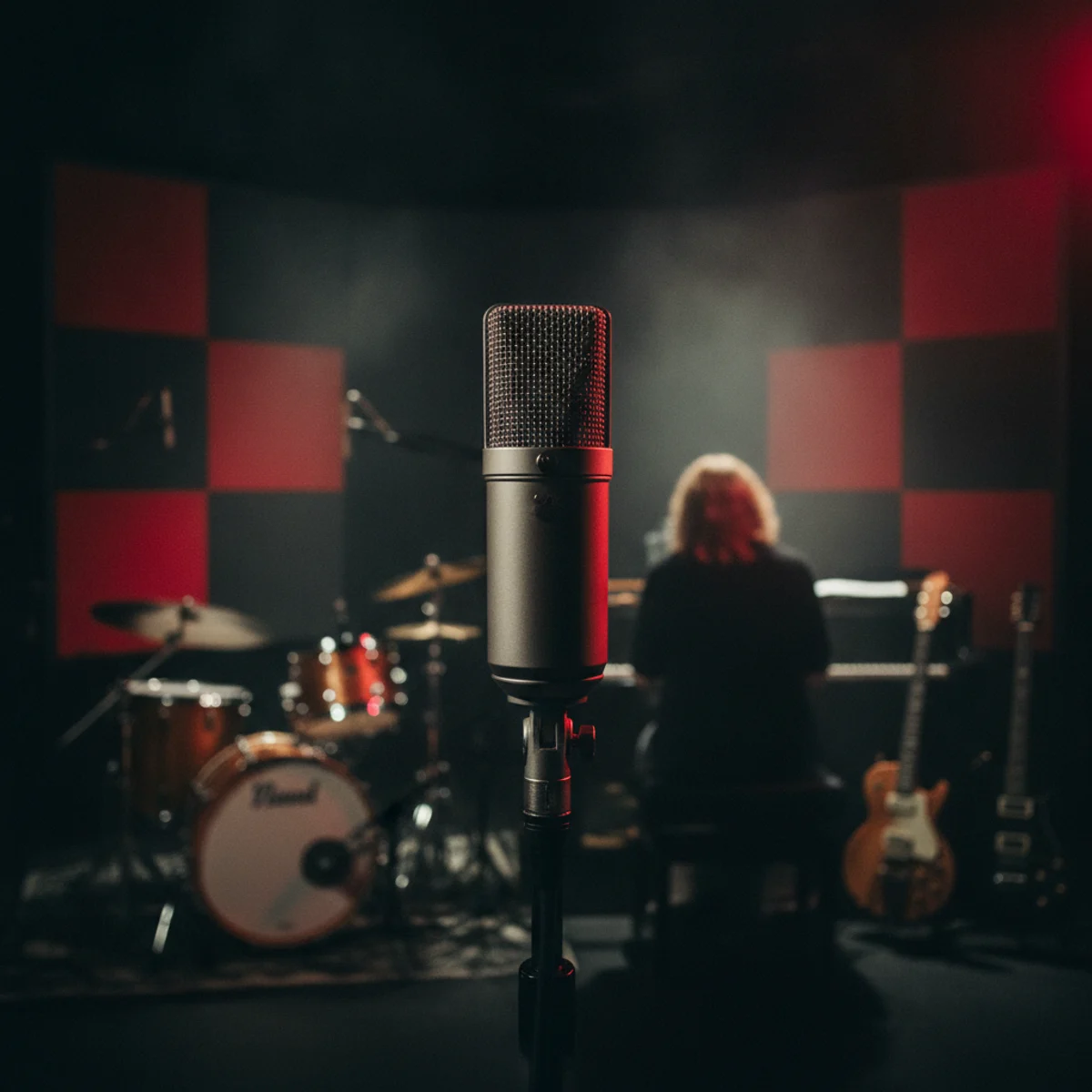
The practical method is a pair of microphones placed well back from the kit, sometimes many metres away, capturing predominantly room sound rather than direct sound.
Those room microphones are then compressed, frequently very heavily. Compression raises the level of the decaying reflections relative to the initial hit, which extends the apparent decay and pushes the room forward in the balance.
Blended underneath close microphones that supply definition and attack, the result is a kit with the articulation of a close recording and the scale of a large space. That combination is the classic heavy drum sound in essentially every era it appears.
Compression Is Doing Something Specific
It is worth being precise about what the compression contributes, because it is not simply level control.
A heavily compressed room microphone with a fast attack and a slow release ducks on each drum hit and then swells back up during the decay. That produces an audible breathing effect that follows the rhythm, adding a sense of the room being excited and recovering.
That pumping is not an artefact tolerated for the sake of level; it is a substantial part of the character. Applied to a room signal it makes the space sound like it is responding to the playing, which a linear capture does not.
Parallel compression is the standard refinement on the room channel. Blending a heavily compressed copy underneath the natural one keeps the transients intact while adding the sustain and pump, which is why the technique became routine in heavy production.

Which Rooms Work
Not every large space produces a usable drum sound, and the properties that matter are reasonably predictable.
Hard reflective surfaces are necessary, since carpet and soft furnishing absorb exactly the energy being sought. Height helps, because it lengthens the path to the ceiling reflection. Irregular geometry is better than a plain rectangle, which produces strong resonances at specific frequencies.
That combination describes stone halls, converted industrial buildings, stairwells and large houses, which is why so many well-known drum sounds were recorded in buildings that were not studios. The rooms were chosen for their acoustics and the recording equipment was brought to them.
Why Simulation Remains Hard
Convolution reverb can capture a room’s response accurately, and sampled drum libraries include room microphone channels recorded in famous spaces, yet the results still tend to sound different from the original recordings.
Part of the reason is that a real room responds to the actual playing: how hard the drummer hits, where the kit sits, how the cymbals excite the space. A sampled room applies a fixed response regardless.
The more significant part is that these recordings capture a drummer playing into a room they can hear, adjusting their playing to it. That feedback between performer and space is the element no amount of processing applied afterwards reproduces.
The drummer’s playing is part of what the room captures. Hitting harder excites the space more, so a player who understands the room can control how much of it appears in the recording, which no amount of processing afterwards reproduces.






About The Author

More Stories
The Case Against Rock Being Dead
Why Metal Subgenres Multiply
The Bass Guitar Problem in Heavy Mixes