

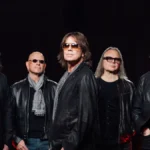


Robert Randolph photographed in 2016.
Robert Randolph won his first Grammy in February, for an album named after the children of preachers.
He had been nominated six times before without winning.
Six Nominations and Then One
A run of nominations without a win is a specific professional position and a frustrating one.
It establishes standing with peers, since nomination is a vote by the people doing the same work, while leaving the public record incomplete in a way that follows an artist to every subsequent ceremony.
Voters also have a documented tendency to reward accumulated standing rather than a single record, which is why a seventh nomination converts more often than a first.
Whether that reflects on the album or on the voting is a question the recipient rarely has any interest in exploring.
What Sacred Steel Is
His instrument comes from a tradition most listeners have never heard named.
Certain Pentecostal churches, unable or unwilling to use an organ, adopted the lap and pedal steel guitar as the instrument that carried the service, and a distinct playing style developed inside those congregations over decades.
It was almost entirely unknown outside the church until musicians raised in it began performing secularly, at which point it arrived fully formed with no obvious precedent in popular music.
An Instrument From Another Genre
The pedal steel is otherwise associated almost exclusively with country music, where it produces the sustained bending tone that defines the format.
The church tradition uses the same hardware to do something entirely different: fast, vocal, percussive playing closer to a lead guitar than to a pad.
Hearing the instrument played that way is genuinely disorienting for anybody whose reference is a Nashville record, which is part of the appeal.
What the Title Means
The album is named for children raised in the church by preacher parents, and it is a specific social category rather than a metaphor.
Growing up inside a congregation means learning to perform in front of people from early childhood, in a context where the performance has consequences beyond entertainment.
An unusual proportion of American popular musicians come from exactly that background, and it is one of the least discussed pipelines in the music.
Made With Other Preachers’ Children
The record was built with musicians who share that upbringing, which turns the title into a description of the personnel rather than a theme.
Assembling a band around a shared formation rather than a shared genre produces a specific kind of playing, since everybody involved learned the same conventions about dynamics and call and response.
It is also a quietly pointed piece of curation, given how frequently that background is treated as biography rather than as training.
Sacred and Secular
The crossing from church music to commercial music has a long and frequently painful history in American popular song.
Musicians who made it were routinely condemned by their congregations, and several of the most important figures in twentieth-century music spent decades negotiating that split.
What has changed is that the crossing is now discussed openly rather than as a betrayal, which is a substantial cultural shift within living memory.
Produced by an Outsider to the Genre
The album was produced by Shooter Jennings, whose background is in country and rock rather than blues or gospel.
Producers from outside a genre bring a useful ignorance. They do not know which conventions are compulsory, and they ask questions an insider would consider settled.
It also removes the temptation to make a record that sounds like the last successful one in the category.
Recorded at Sunset Sound
The sessions took place at Sunset Sound in Los Angeles, a studio with a substantial history in rock recording.
Rooms of that vintage are used partly for the sound and partly for the equipment, since analogue consoles and echo chambers of that era cannot be replicated in software convincingly.
Booking one signals an intention to record a band playing together rather than to assemble a record from parts.
An Instinct-First Approach
The recording was described as prioritising feel over polish, which is a familiar claim and occasionally a true one.
What it usually means in practice is fewer takes, minimal correction, and accepting performances with audible imperfections because the alternative loses something.
For music derived from a live church tradition, that is closer to the source than a corrected recording could be.
Released Through Sun
The album came out through Sun Records, a label whose name carries an enormous amount of American music history.
Labels with catalogues of that weight face a permanent difficulty: new signings are measured against a back catalogue nobody could equal.
A blues category win is about as good an outcome as that arrangement can produce, since it connects the present roster to what the name is known for.
The Blues Categories
The Grammy blues categories are small, and the same names recur across years in a way the larger fields do not.
Two awards cover traditional and contemporary blues, which is a narrow allocation for a form that underpins most American popular music.
It also means the competition is concentrated, and a nomination genuinely indicates standing rather than being one of dozens.
A Festival Headline in June
He headlines a Colorado blues festival on 6 June, at a regional park rather than a purpose-built venue.
Regional blues festivals are the working circuit for this genre, and there are far more of them than the coverage suggests.
Headlining them is where the income is, and a category win in February materially changes what those bookings pay.
What a Win Changes
The practical effect of a first Grammy is smaller than the ceremony suggests and larger than cynics allow.
It does not sell many records. It does change booking fees, festival billing and the willingness of larger venues to take a risk.
For an artist in a small category, that is the whole value, and it compounds across the several years that follow.
How a Church Tradition Reaches a Concert Stage
The transfer is more difficult than it sounds, and most attempts fail for reasons that have nothing to do with musicianship.
Church music is functional. It exists to support a service, respond to a congregation and build across an hour toward something, and the musicians take cues from a room that is participating rather than watching.
A concert audience does none of that. It sits, it watches, and it expects a beginning and an end. Music built for participation frequently sounds shapeless when the participation is removed.
The players who make the crossing successfully generally rebuild the material rather than transplanting it, keeping the vocabulary and imposing the structure a concert requires. That is a compositional job, and it is why so few sacred musicians have managed it.
Why the Instrument Never Spread
Sacred steel remained invisible for decades despite being extraordinary, and the reasons are worth stating.
It existed inside a denomination rather than inside an industry, with no recordings distributed outside the church, no press and no commercial interest in documenting it. The musicians were not trying to be discovered.
It also sat on an instrument the wider industry had already categorised. Anybody hearing a pedal steel assumed country, which is a strong enough association to prevent the sound being heard on its own terms.
What changed was individual musicians choosing to perform outside the church, at which point the tradition became audible to people who had no idea it existed. That is a fragile mechanism, and it depends entirely on somebody being willing to make the crossing.
What Is Actually Being Tested
Two things. Whether a first win at the seventh attempt reads as recognition of one album or as an accumulated debt being settled.
And whether a tradition that survived by being invisible gains anything from a category win, or simply gets described more often without being heard more.
Six nominations, one win, an album named for a childhood, and an instrument nobody expects to hear played that way.
About The Author



More Stories
The Sound of Burlington Rock-Blues: Off the Tracks by Brian Leduke
Matt Springfield: Poplife and Its Greg Haver Sessions, Reconsidered
How FYDStar Got Scream’s Cosmic Sludge Pop Out of a Bass and Drums Duo