






What Happens When Theatrical Rock Gets Tracked in a Home Studio with No Label Behind It
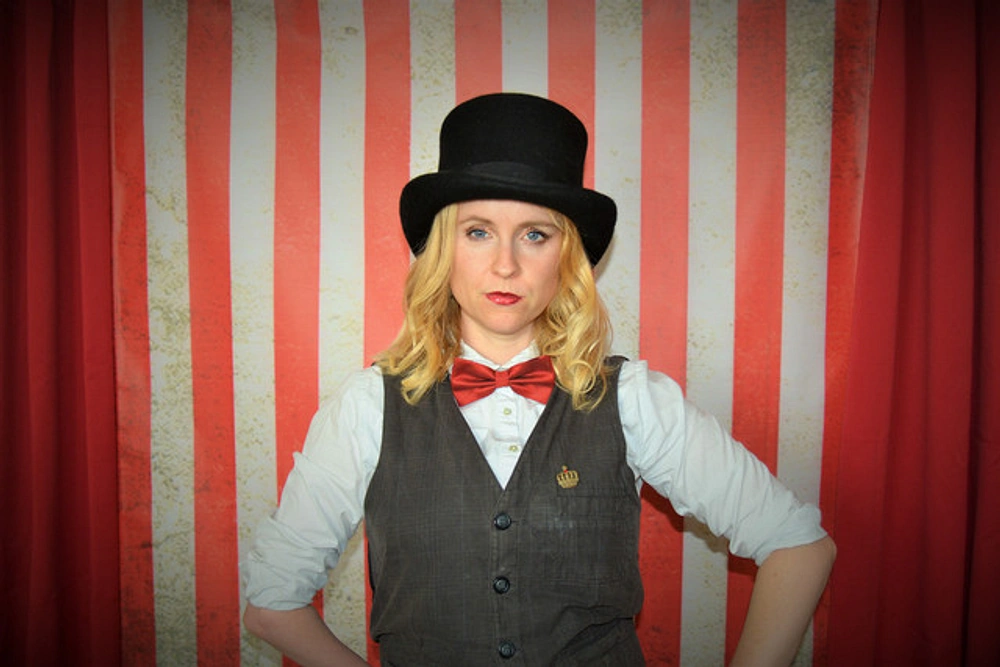
Seven tracks into Sideshow, the 2020 album by Louise Steel, the production stops. Lady Labyrinth is a voice and a piano and nothing else. After six songs of stacked guitars and staged drama, the space around it does most of the work. Get Ready to ROCK! called it magnificent and gave the album four stars. What produced that moment is the better story: two years of work, a partner on keyboards, a home studio, and no label anywhere in the chain.
Louise Steel is in the playlist below. Sideshow came to this desk through PopHits.Co Music Charts, which verifies independent artists and places their releases across its network of music news titles. Her coverage sits on the Louise Steel profile. Play it once, then read on.


The Wave Runs From Jim Steinman To A Spare Room
There is a strand of rock that treats a song as a stage rather than a document. It wants key changes, weather, characters, and a narrator who is audibly performing. Jim Steinman built it for Meat Loaf and Bonnie Tyler. It never went away. It just stopped getting label budgets.
Louise Steel is explicit about where she sits in it. Asked about her influences by Get Ready to ROCK! in 2017, she named Steinman and quoted his creed back: “His famous quote is ‘If you don’t go over the top, you can’t see what’s on the other side’ and I really believe in that!” That is not a comparison a writer imposed on her. It is the brief she set herself.
Sideshow arrived on 30 October 2020, and it is what that brief sounds like with the budget removed. She made it across two years that included personal loss, with her songwriting partner Andrew Dunmore again on production.

What The Record Actually Sounds Like
The review that matters here is specific rather than kind. Writing for Get Ready to ROCK!, Jason Ritchie noted that the sound is clear and “sounds like a big label production”. That is the whole point, given there was no big label. He marks Masquerade for a lyric with bite and Aura for putting guitar crunch against a pop melody. Dollhouse Dream he flags as the one that rewards the arrangement rather than the hook.
That tallies with what is on the record. The theatrics are structural, not decorative. The drama sits in how the songs are built and paced, so the quiet ending of Lady Labyrinth reads as a decision rather than an absence.
The routing behind that sound is worth spelling out, because it explains how a record like this gets made now. On the previous album, Heartstorm, a studio in Malaysia tracked the instruments. A producer there had found her music online and asked whether his musician friends could cover one of her songs. She and Dunmore then recorded vocals and keyboards in the UK, two American players added guitar and backing vocals, and Malaysia handled the mix and the master. That is not a reduced version of a studio album. It is a different supply chain arriving at the same place, and it is why this scale reaches an artist with no label at all.
The scene around her is regional and real rather than notional. BBC Music Introducing has played her tracks, and BBC Radio Leicester made Sideshow and the later Anomaly its Track of the Week. Ritchie’s closing line names the condition plainly: newer artists find it very difficult to get heard, especially with no label backing.

Adjacent Acts, And Where Louise Steel Sideshow Sits
For coordinates, take the three she offers herself. Meat Loaf is the Steinman delivery system. The songs run long, the vocal treats them as performance, and nothing apologises for the scale. Bonnie Tyler is the other half of that catalogue and the closer vocal reference, a voice with grain in it carrying a melody that keeps climbing. Halestorm is the contemporary end. Steel named them as the band she would most want to tour with, singling out Lzzy Hale’s delivery.
Put those three in a row and the record is easy to place. Steinman’s construction, Tyler’s register, and a modern rock production that wants drama. The distance is in resources, not in intent.
Sideshow is a catalogue record rather than a new one, and that is a fair way to meet it. Six years on, artists with no infrastructure behind them are working that theatrical strand hard again. That makes this album an early example rather than an artefact.
Where To Hear Sideshow By Louise Steel
The eight tracks run Sideshow, Masquerade, Background Noise, Dollhouse Dream, Swag, Aura, Lady Labyrinth and Showstopper. The sequencing is deliberate: the loudest theatre arrives first, and the piano waits until the end.
You can hear the album on Spotify and Apple Music. The title track has an official video on her YouTube channel, which also holds the acoustic versions and the covers. Her own Louise Steel Music playlist collects the catalogue in one place. Louise Steel posts on Instagram, Facebook and X.








About The Author



More Stories
The Sound of Marigny Studio and the Bayou on Rising by Jeb Rault
Swiss Dialect Rock, Reconsidered Through Zueri by Dave Curl
How Bite To Break Got the Weight of Slam and Death Metal Onto In My Head